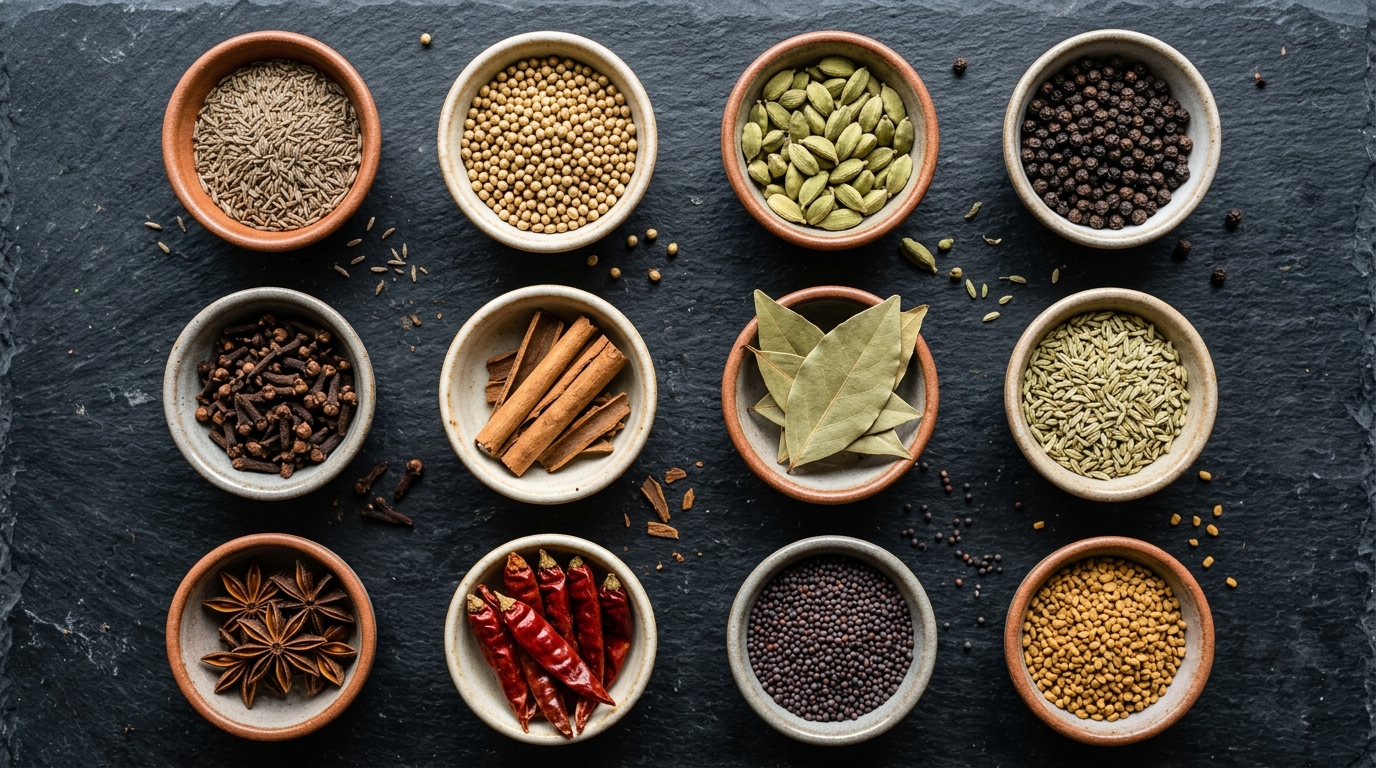
India: The World's Spice Capital
India produces, consumes, and exports more spices than any other nation on earth. With over 109 spice varieties grown across diverse agro-climatic zones, India contributes approximately 75% of global spice production. In FY2023-24, India exported spices worth over USD 4.25 billion.
1. Black Pepper — "The King of Spices"
Origin: Kerala, Karnataka | Piperine Content: 4–7%
Black pepper from the Malabar Coast of Kerala is the benchmark for global quality. Malabar Garbled Grade is the premium export specification — machine cleaned, uniform bold berries with no light berries or stalks. Moisture max 12%, bulk density min 550 g/litre.
2. Cardamom — "Queen of Spices"
Origin: Idukki district, Kerala; Coorg, Karnataka | Volatile oil: Min 4%
India is the world's 2nd largest producer of cardamom. Kerala's high-altitude Idukki hills produce cardamom with an intense eucalyptol-rich aroma that buyers in Saudi Arabia, UAE and USA prize highly. Green Bold (7–8mm+), AGEB/AGB grade, moisture max 12%.
3. Cumin (Cuminum cyminum)
Origin: Rajasthan, Gujarat (Unjha APMC — Asia's largest cumin market) | Volatile oil: Min 2%
Unjha Cumin from Gujarat has a naturally higher volatile oil content and is the benchmark cumin quality for export to the Middle East, USA, and Europe. Available in whole, ground, and steam-sterilized forms. Moisture max 9%.
4. Coriander (Coriandrum sativum)
Origin: Rajasthan, Madhya Pradesh, Gujarat | Varieties: Eagle, Scooter, Badami
India exports coriander seeds and ground coriander powder globally. The Eagle variety from Rajasthan is the most preferred for export due to its bold seed size and strong citrusy aroma. Moisture max 9%, volatile oil min 0.3%.
5. Chilli & Paprika
Origin: Andhra Pradesh, Telangana, Karnataka | Varieties: Teja, 334, Byadagi, Guntur
Teja chilli (S17) from Andhra Pradesh is the world's most-exported chilli variety due to its high pungency (100,000+ SHU) and deep red colour. Byadagi from Karnataka is prized for its exceptional colour (130+ ASTA) and mild pungency — ideal for colour extraction and paprika manufacturing.
6. Ginger (Zingiber officinale)
Origin: Kerala, Himachal Pradesh, Meghalaya | Gingerol content: Min 1%
Cochin Ginger is the international benchmark. Available as dried finger/split ginger, bleached ginger, and spray-dried ginger powder. High gingerol content variants are preferred by nutraceutical and beverage companies. Moisture max 10% (dried).
7. Fenugreek (Trigonella foenum-graecum)
Origin: Rajasthan, Gujarat, Madhya Pradesh
India produces 80% of the world's fenugreek. The seeds are used as a cooking spice, while the diosgenin-rich extract is in high demand globally for steroidal pharmaceuticals and natural health supplements. Moisture max 8%, Diosgenin 0.3–1.5%.
8. Fennel (Foeniculum vulgare)
Origin: Gujarat, Rajasthan | Trans-anethole: 60–80%
Gujarat produces India's finest export-grade fennel seeds, known for their uniform green colour, sweet aniseed aroma, and high trans-anethole content. Popular in European and Gulf markets for herbal teas and digestive products. Moisture max 9%.
9. Mustard Seeds
Origin: Rajasthan, Madhya Pradesh, West Bengal | Oil content: 38–42%
Yellow mustard from Rajasthan is the global standard for prepared mustard condiments. Black mustard from Bengal is preferred for traditional regional cooking and essential oil extraction. Moisture max 8%.
Export Quality Standards You Must Know
All Indian spice exports must comply with: Spices Board of India quality norms (mandatory), FSSAI (domestic safety standards), US FDA 21 CFR (for USA-bound shipments), EU Regulation (EC) No 1881/2006 (contaminant limits for EU).
For steam sterilized (pathogen-free) spices, ask specifically for ETO-free steam sterilized options which are now mandatory in the EU market.